
Jerash's Legacy
What did the Romans do for Us?

A fourteen-hour layover in Amman Airport in Jordan surprisingly reminded me of just how much I love the country. The fault was mine. I must learn the difference between 00.05 and 12.05 when planning my flights.
Luckily my bank account gets me access to airport lounges, and the comfort and hospitality on offer kept me sane, happy even.
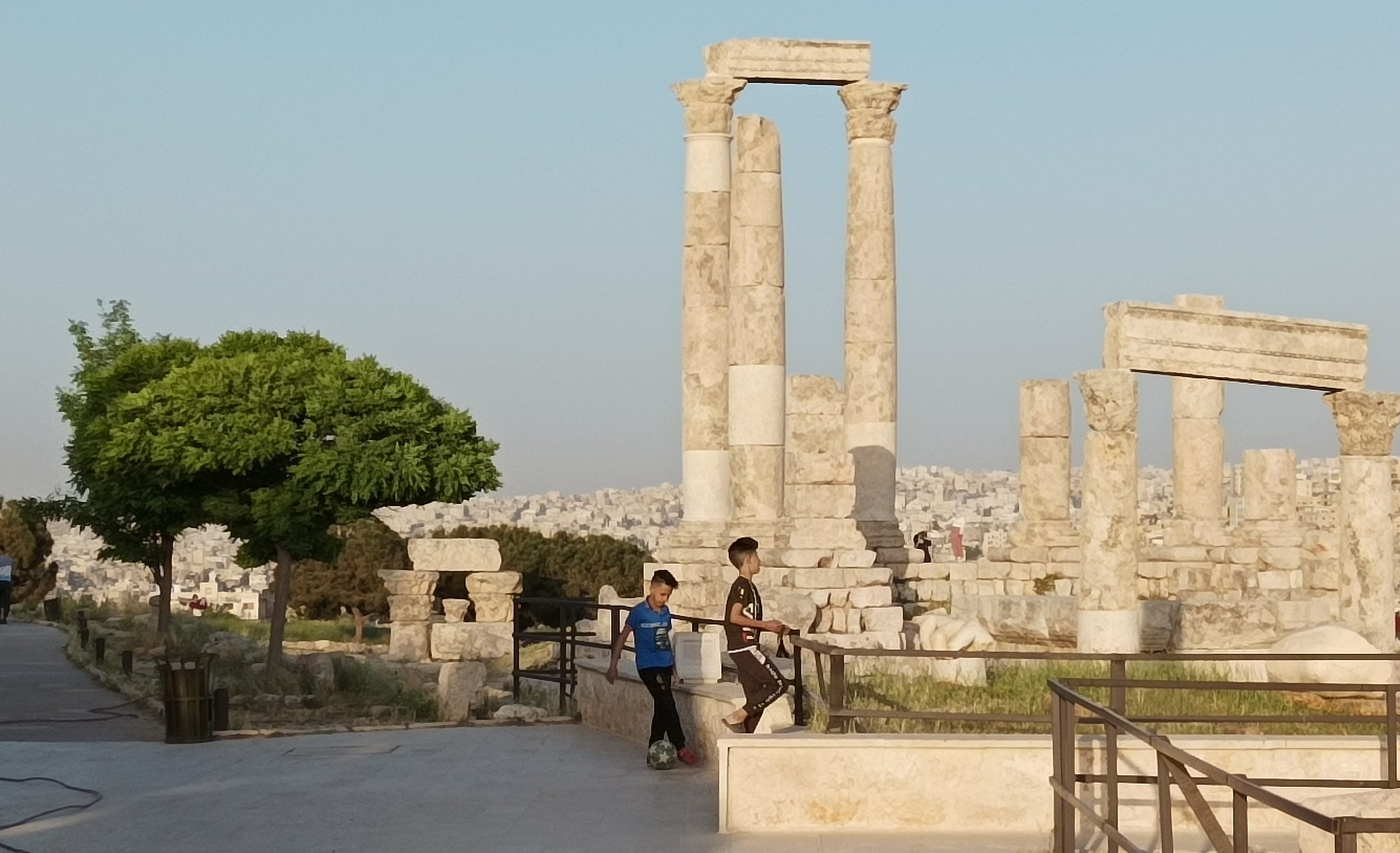
It gave me time to think about my earlier visit to Amman and the trips I made from there, in particular the spectacular Roman city of Jerash.
Jerash, known in antiquity as Gerasa, is one of the best-preserved Roman provincial cities outside of Italy. Located approximately 45 km north of Amman in northern Jordan, the site features an unbroken chain of human occupation dating back over 6,500 years, from Neolithic times through Bronze and Iron Ages, Hellenistic, Roman, Byzantine, and early Islamic periods.
Its Roman-era ruins, often called the “Pompeii of the Middle East,” offer a vivid window into classical urban planning and continue to influence contemporary discussions on city design, sustainability, and cultural heritage preservation.
I was staying in Amman when I visited. It was one of those days that really got me thinking.
Historical Flourishing Under Roman Rule
Gerasa joined the Decapolis league, a group of ten Greco-Roman cities in the region, following Roman conquest by General Pompey in 63 BCE. It prospered under the Pax Romana, benefiting from its strategic position on trade routes connecting the Mediterranean with Arabia, India, and beyond.
By the 1st–3rd centuries CE, the city reached its golden age, with an estimated population of around 20,000 at its peak.
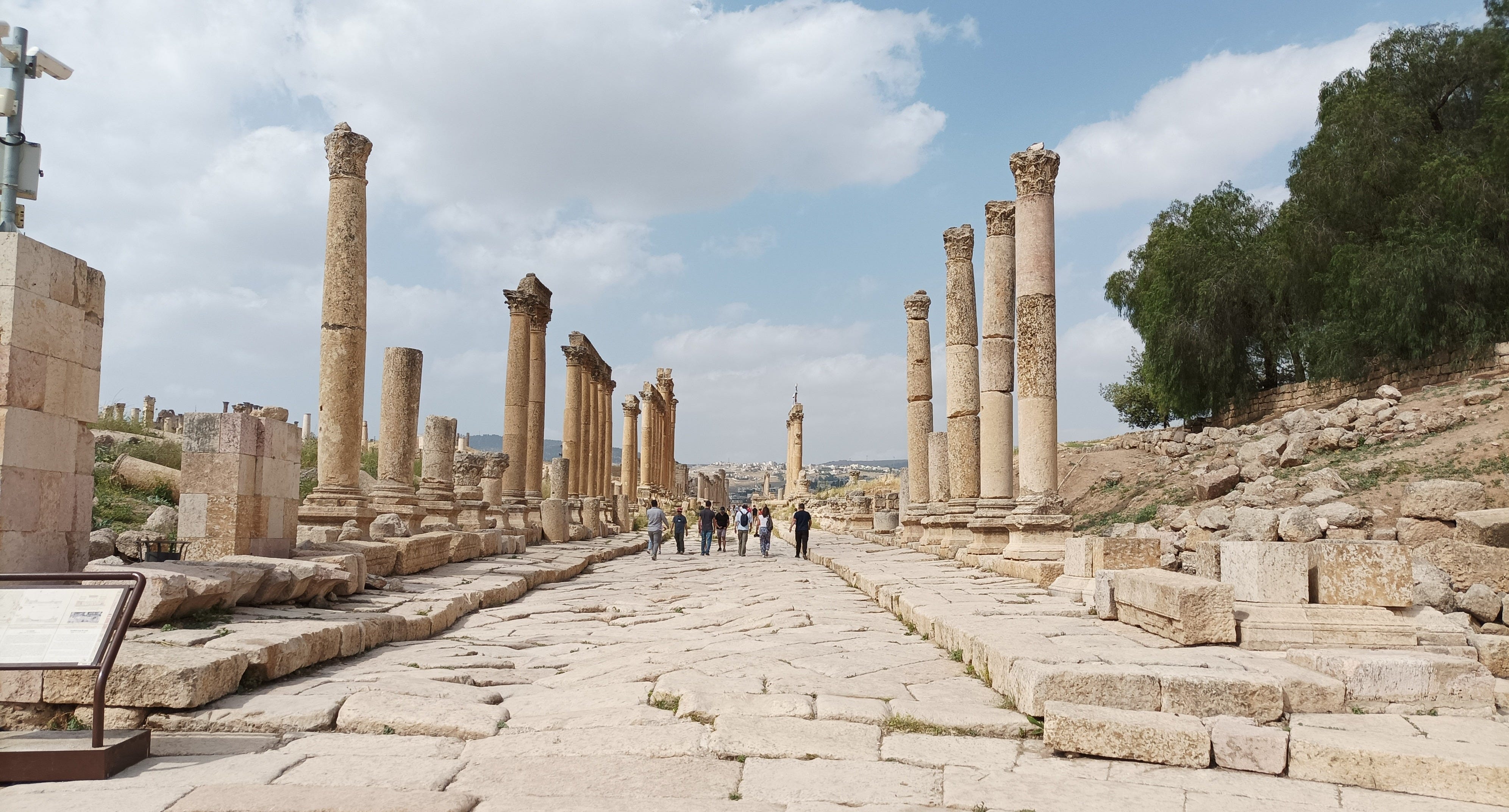
Roman engineers transformed Gerasa with a sophisticated urban grid featuring colonnaded and paved streets, public squares, temples, theaters, baths, and fountains. Key surviving monuments include:
The Oval Forum (or Plaza), a unique elliptical space about 90m x 80m surrounded by Ionic columns, serving as a central gathering point.
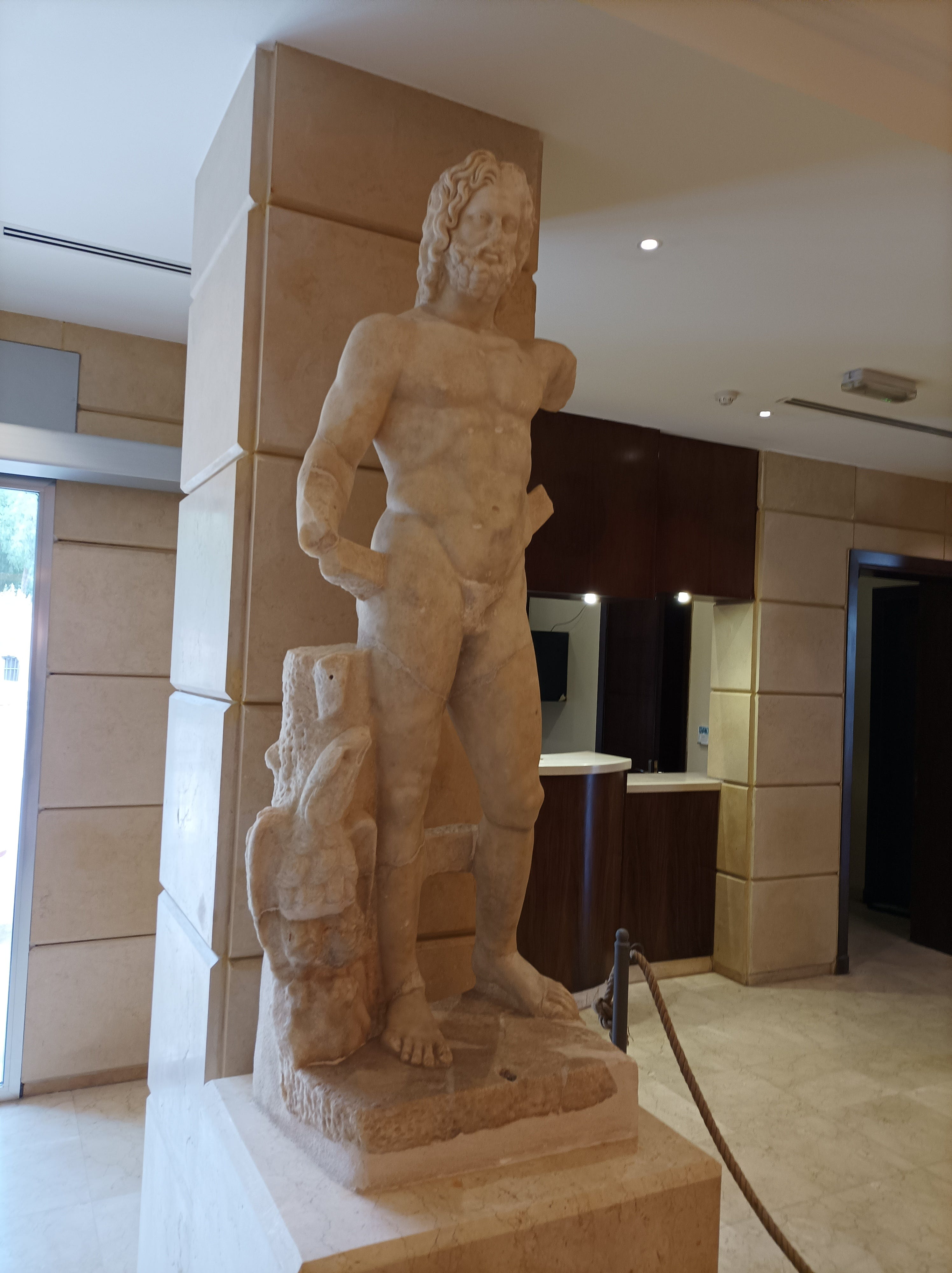
The Temple of Artemis and Temple of Zeus, grand sanctuaries on elevated positions.
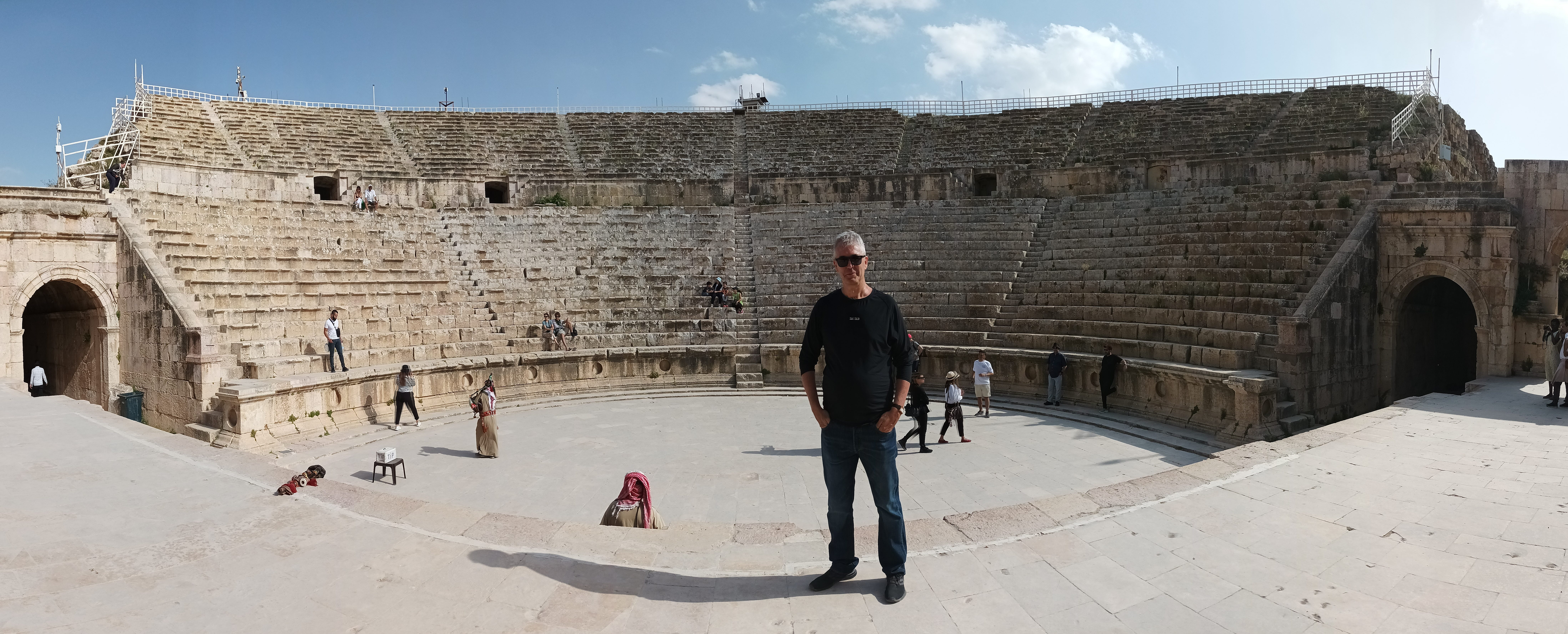
Two theatres (South and North), the former still used for performances.
Hadrian’s Arch, built in 129–130 CE to honor Emperor Hadrian’s visit.
A hippodrome, colonnaded streets (notably the Cardo Maximus), a nymphaeum, and extensive city walls.
The city’s layout was based on Roman urban planning ideals: axial planning for efficient movement, public spaces for civic life, and integration with the natural landscape, including the Chrysorhoas River for water supply.
Prosperity declined with shifts in trade routes, earthquakes (notably in 749 CE), and political changes, leading to abandonment by the 12th century. Excavations began in earnest in the 1920s, revealing the site’s exceptional preservation due to the arid climate and burial under sand.
Modern Jerash
Today, the ancient ruins sit adjacent to the modern city of Jerash, which has grown around the site. The ruins are Jordan’s second-most popular tourist destination after Petra, drawing visitors to experience its theaters, arches, and streets.
Annual events like the Jerash Festival of Culture and Arts bring the ancient venues to life with performances. Tourism provides economic benefits but also pressures the site and surrounding community.
Preservation efforts, supported by projects from the World Bank and Jordanian authorities, balance excavation, restoration, and tourism development.
Challenges include urban encroachment, as modern homes and businesses exist within or near ancient boundaries, complicating full archaeological protection.
But it’s still a great place to visit.
Impact on Modern City Living
Jerash’s Roman planning offers valuable insights for contemporary urban challenges, particularly in sustainable development, livability, and heritage integration.
1. Integrated Public Spaces and Walkability
Roman cities like Gerasa prioritized colonnaded streets and plazas that facilitated social interaction, commerce, and movement sheltered from the elements. While car-dominated modern cities are facing congestion and isolation, Jerash underscores the value of pedestrian-friendly designs, shaded walkways, and multifunctional public squares. These elements can reduce urban heat, encourage community engagement, and improve mental health, principles echoed in today’s “15-minute city” concepts.
2. Resilience and Adaptability
Gerasa adapted across empires (Hellenistic to Roman to Byzantine to Islamic), repurposing temples into churches and integrating new structures. This layered resilience informs modern urban planning amid climate change and demographic shifts. The city’s water management (river integration and fountains) highlights sustainable resource use, relevant for water-scarce regions like Jordan.
3. Heritage-Led Urban Development
The modern city of Jerash grapples with balancing preservation and growth. Research on sustainable urban development in historic towns like Jerash emphasizes integrating historic fabric with contemporary needs, through tourism infrastructure, community involvement, and adaptive reuse, while avoiding over-commercialization or displacement. Such approaches can foster economic vitality, cultural identity, and tourism revenue without sacrificing livability for residents.
4. Cultural Continuity and Quality of Life
Jerash demonstrates how ancient urban morphology can enhance modern living by reconnecting residents with their heritage. Festivals and educational programs build pride and provide learning opportunities, while thoughtful planning around the site can mitigate pressures from population growth and tourism.
Conclusion
I feel that there’s more to Jerash than its antiquity. It can teach us something about enduring urbanism. Its grand yet practical Roman design, emphasizing order, public amenities, and environmental harmony, gets you thinking about today’s cities and modern living, thoughts from walkability to managing heritage in growing urban areas.
As Jordan, like the rest of the world, faces rapid urbanization, studying sites like Jerash reminds us that successful cities endure when they balance innovation with respect for the past, creating spaces that enrich both daily life and collective memory.
I loved my time there and still think about it regularly.
References
Getty Conservation Institute. (n.d.). A didactic case study of Jarash archaeological site, Jordan. https://www.getty.edu/conservation/publications_resources/pdf_publications/pdf/jarash_case_study.pdf
Jawabreh, O. (2024). Sustainable urban development in historic towns: A case study of Jerash, Jordan. GeoJournal of Tourism and Geosites. https://gtg.webhost.uoradea.ro/PDF/GTG-4-2024/gtg.56436-1350.pdf
Wikipedia. (n.d.). Jerash. Retrieved May 28, 2026, from https://en.wikipedia.org/wiki/Jerash
World History Encyclopedia. (2018). Jerash. https://www.worldhistory.org/Jerash/
Footnotes
If you’ve enjoyed this article, please join our community and help share the message through subscribing, clicking like, and restacking to your community.
I promote the Action Learning Questions method to address complex challenges with potentially multiple answers.
Full disclosure we benefit from community members joining the Action Learning Facilitator Accreditation (ALFA) Post-Graduate Certificate with York St. John University. This helps our channel.
My latest book, Delivering Social Value in Urban Development, a collected series of essays, is published through Kindle Direct Publishing and available on most Amazon portals.
Please also check out our Concepts, Case Studies and Tools for Program Managers, Urban Planners, Policy Makers and Communities on Gumroad.
You may also like the article Revitalizing Connections: The Case for Traditional Architecture:
Jerash, known in antiquity as Gerasa, is one of the best-preserved Roman provincial cities outside of Italy. Located approximately 45 km north of Amman in northern Jordan, the site features an unbroken chain of human occupation dating back over 6,500 years, from Neolithic times through Bronze and Iron Ages, Hellenistic, Roman, Byzantine, and early Islamic periods.
Its Roman-era ruins, often called the “Pompeii of the Middle East,” offer a vivid window into classical urban planning and continue to influence contemporary discussions on city design, sustainability, and cultural heritage preservation.
I was staying in Amman when I visited. It was one of those days that really got me thinking.