
Converting Freight-Only Railway Lines to Passenger Use
The East Cleveland Feasibility Study


Decent infrastructure is pretty much a prerequisite for thriving towns and villages. And places where distances aren’t really all that great can feel cut off, remote and, to coin a phrase, left behind.
I’ve worked on very large-scale infrastructure development projects, but have become increasingly fascinated by targeted, relatively modest investments that bring big community benefits.
Within this context converting freight-only railway lines to accommodate passenger services represents a promising yet complex strategy for revitalizing underserved regions.
I think it’s proven that these projects can enhance connectivity, stimulate economic growth, and promote sustainable transport. But at the same time, they often face substantial infrastructural, financial, and operational hurdles.
In this article I’m going to take a hyperlocal approach, examining the ongoing feasibility assessment in East Cleveland, UK, for the Saltburn to Boulby freight line.
It is a part of the world I know and love. And it is a part of the world that could do with a break to help it reach its full potential.
The East Cleveland Context and Feasibility Study
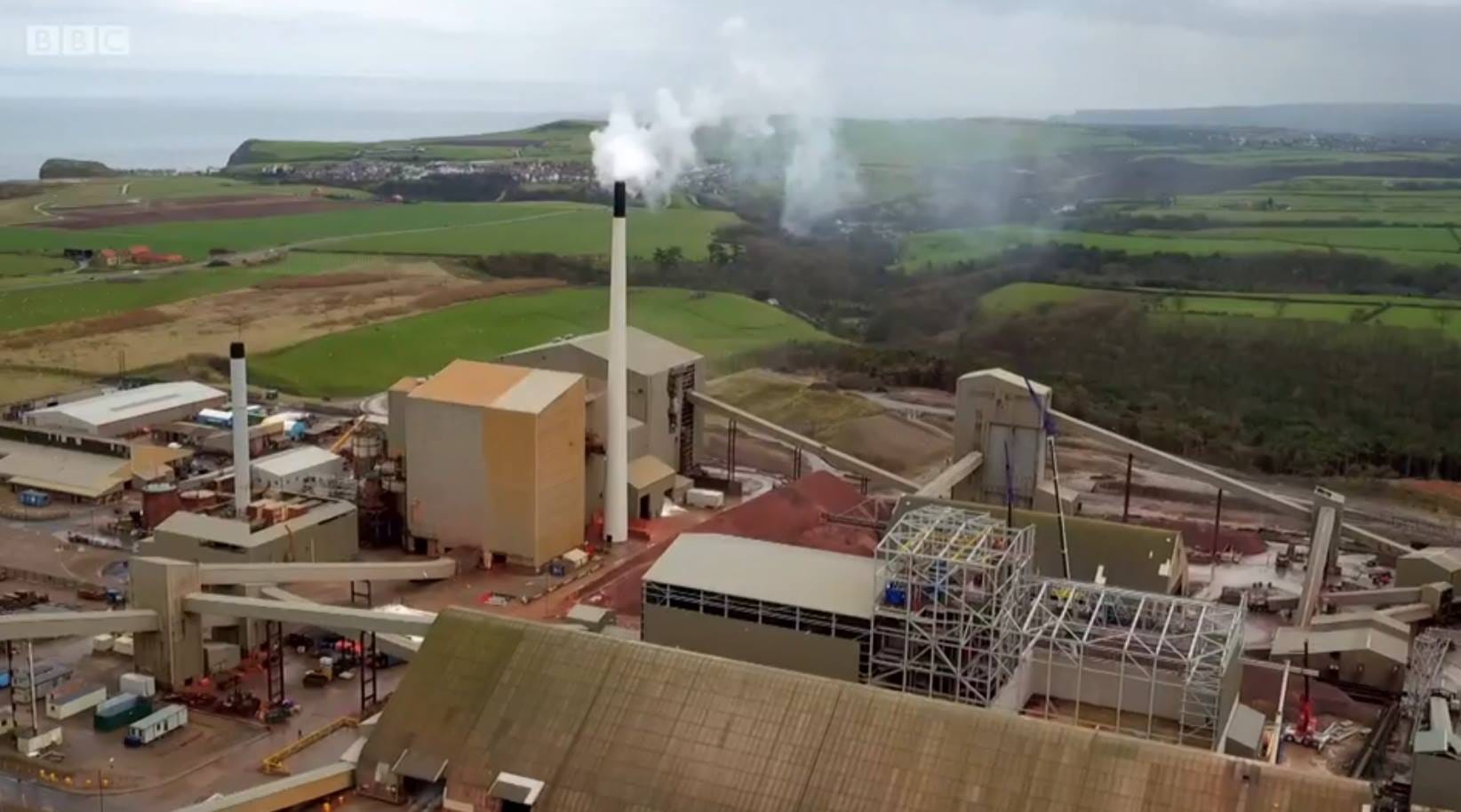
The Saltburn to Boulby line currently serves freight traffic for British Steel Special Profiles at Skinningrove and the Boulby Mine (operated by Cleveland Potash/ICL, primarily producing polyhalite/ polysulphate fertilizer and rock salt).
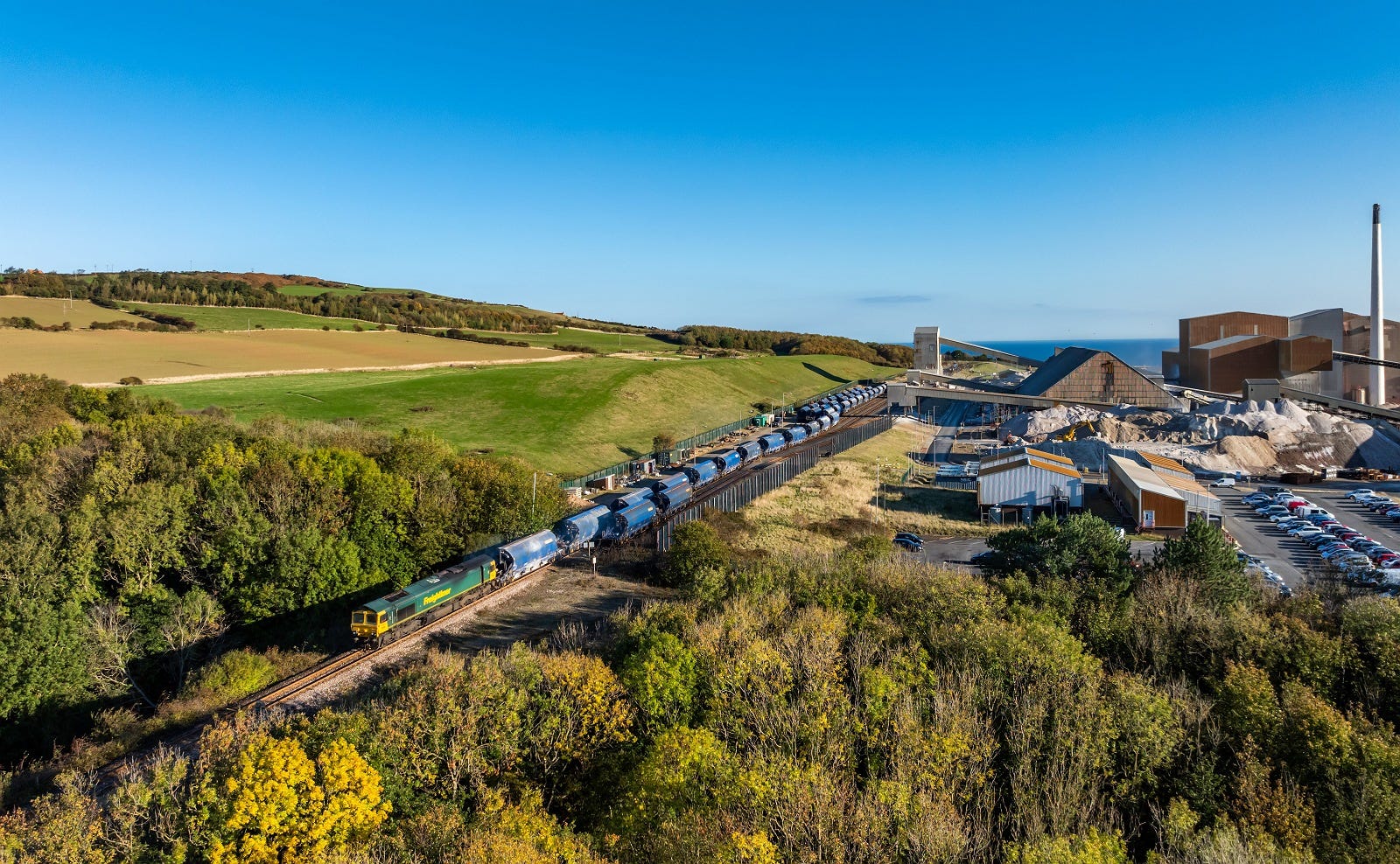
Passenger services on this route ceased decades ago, leaving communities in East Cleveland reliant on limited bus services and private vehicles.
In 2024, the Tees Valley Combined Authority (TVCA) commissioned Arup to conduct a detailed feasibility study, including a Strategic Outline Business Case (SOBC) and options assessment.
The study, published in July 2026, evaluates reinstating regular passenger services, potentially with new stations at locations such as Saltburn West, Skelton, Brotton, Carlin How, and Loftus. Options include diverting existing services and balancing operations with ongoing freight traffic.
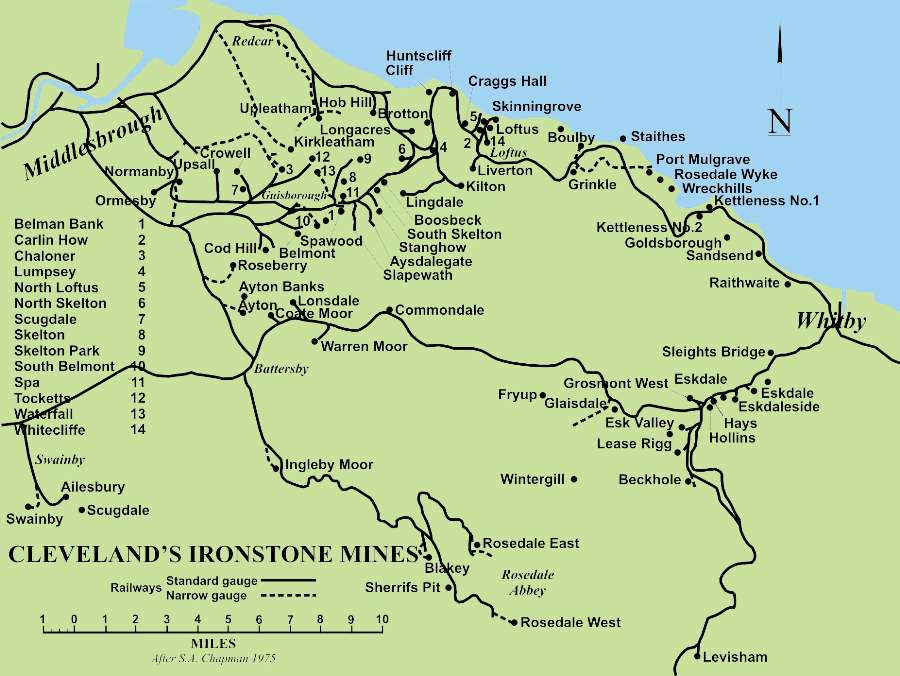
Challenges Facing the Area
I know and love the area but East Cleveland, part of Redcar and Cleveland, is grappling with significant socio-economic challenges. There is an east-west divide in deprivation, with eastern rural communities (e.g., Loftus, Carlin How) experiencing high levels of income, health, and education deprivation. These areas rank among the most vulnerable in the UK for transport-related social exclusion.
Key statistics underscore the issues:
Redcar and Cleveland has notable deprivation rankings, with eastern areas particularly affected.
Unemployment and economic inactivity contribute to limited access to jobs, education, and services. (Note: Broader Tees Valley and national contexts show varying local rates, with claimant counts around 3.7% in recent data for the borough.)
Low car ownership in deprived pockets exacerbates isolation, as public transport options are sparse beyond Saltburn.
Additional challenges for the rail project include:
High Capital Costs: Estimates range from £107 million to £329 million for track renewals, signalling upgrades, new stations, and infrastructure to meet Network Rail standards. Many sections are in poor condition.
Operational Constraints: The line beyond Skinningrove is privately owned by Cleveland Potash, complicating integration with national networks. Passenger services must coexist with freight (vital for local industry, with Boulby producing around 1 million tonnes of polyhalite annually in recent years).
Line alignment limits significant journey time improvements.
Weak Business Case: Under standard appraisal criteria, projected costs outweigh monetised benefits, making it difficult to secure government funding. A 60-year appraisal shows low Value for Money (VfM) ratios initially.
Other Risks: Coastal erosion threats, regulatory hurdles, and the need for phased delivery add complexity.
Benefits and Opportunities
Despite these barriers, the study identifies strong strategic opportunities. Reinstating passenger services could transform connectivity, linking deprived eastern communities to jobs in Tees Valley hubs like Middlesbrough and Redcar, as well as education and healthcare.
Key Potential Benefits:
Social Inclusion and Regeneration: Improved access could reduce isolation, boost employment opportunities, and support housing and town centre revitalization. Non-monetised benefits include better health outcomes and reduced social exclusion.
Economic and Tourism Growth: Enhanced links to coastal attractions, the Land of Iron heritage sites, and the North York Moors National Park could stimulate the visitor economy. The route offers sustainable access for tourists from wider Tees Valley and beyond.
Sustainability: Shifting trips from road to rail aligns with decarbonisation goals and regional transport plans (e.g., TVCA Strategic Transport Plan 2020-2030 and Transport for the North priorities).
Demand Potential: Indicative forecasts suggest viable passenger numbers, particularly with new stations serving population centers.
Boulby Mine continues to support local employment (hundreds of jobs, with many workers living nearby), and passenger services could complement rather than disrupt this.
Broader Lessons for Freight-to-Passenger Conversions
This case in East Cleveland illustrates common themes with broader application: high upfront costs for upgrading legacy infrastructure and integrating mixed traffic, balanced against long-term socio-economic gains.
Success often depends on innovative funding (e.g., beyond traditional BCR thresholds), phased implementation, and strong stakeholder alignment between Network Rail, private owners, local authorities, and operators.
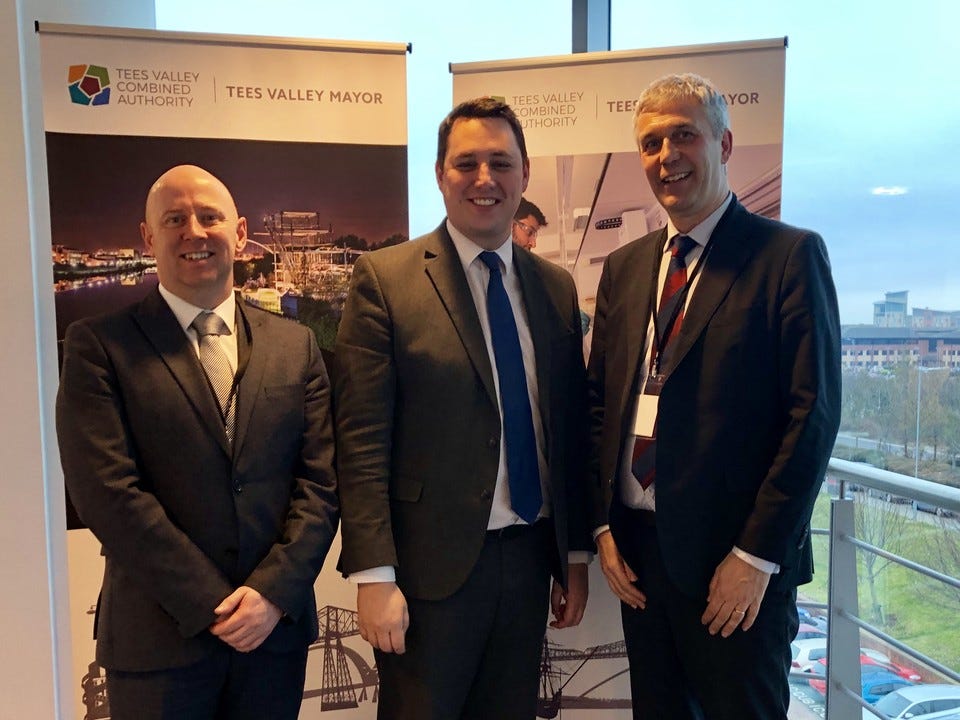
Local leaders, including Tees Valley Mayor Ben Houchen, emphasize looking beyond immediate costs to connectivity needs, while continuing to explore complementary transport solutions.
Conclusion
The Saltburn to Boulby feasibility study provides a valuable evidence base, confirming technical feasibility but highlighting the need for substantial investment and potentially evolved funding criteria to realize benefits.
For East Cleveland, better rail connectivity could be a catalyst for addressing deep-rooted challenges and unlocking opportunities in a region rich in industrial heritage and natural assets.
As next steps are considered, this project exemplifies how targeted rail revival can support inclusive, sustainable growth, if economic and delivery barriers can be overcome.
It is a genuinely beautiful part of the world, with great people who deserve some modest infrastructure investment into their community to make life that bit better.
References
Arup. (2026). East Cleveland Railway Strategic Outline Business Case. Tees Valley Combined Authority. https://teesvalley-ca.gov.uk/wp-content/uploads/2024/02/East-Cleveland-Strategic-Outline-Business-Case.pdf
Rail Technology Magazine. (2026, July 28). East Cleveland passenger rail study reveals multi-million pound challenge for freight line reopening. https://www.railtechnologymagazine.com/articles/east-cleveland-passenger-rail-study-reveals-multi-million-pound-challenge-freight-line
Tees Valley Combined Authority. (n.d.). East Cleveland Railway Line. https://teesvalley-ca.gov.uk/investments/east-cleveland-railway-line/
Annex: Exploring Funding Models for Low Value-for-Money (Low BCR) Rail Projects
Rail projects like the proposed Saltburn to Boulby passenger service often show weak traditional Benefit-Cost Ratios (BCRs) in standard UK appraisals (e.g., WebTAG), as they prioritize monetised transport benefits like time savings over wider social, regeneration, environmental, and strategic gains.
These “low value” schemes, frequently in deprived or rural areas, require alternative or supplementary funding models that recognize broader impacts.
1. Traditional Government and Targeted Funds (with Adaptations)
Restoring Your Railway Fund (and Successors): Launched with £500 million to reopen lines/stations closed in the Beeching era, this fund explicitly targeted connectivity for “left behind” communities, economic regeneration, housing, jobs, education, and tourism. It supported feasibility and delivery for schemes that might not pass strict BCR thresholds. Though the dedicated fund faced changes/cancellation in later years, similar targeted pots or Levelling Up-style funds remain relevant for strategic rail re-openings.
Integrated Settlements and Devolution Deals: English Devolution reforms (e.g., English Devolution White Paper) give Mayoral Combined Authorities (like Tees Valley) consolidated “Integrated Settlements” across transport, housing, regeneration, skills, and growth. This allows flexible reallocation of funds toward priorities like East Cleveland connectivity, reducing siloed departmental constraints. Mayors gain stronger roles in rail planning and potential devolution of local services.
City Region Sustainable Transport Settlements (CRSTS) and Local Transport Funds: Multi-year allocations provide baseline funding that authorities can blend for rail schemes.
These models emphasize strategic fit (e.g., levelling up, net zero) over pure BCR.
2. Land Value Capture (LVC) and Developer Contributions
LVC mechanisms capture uplifts in land and property values created by new infrastructure to help fund it, an equitable approach since the public investment generates private gains.
Business Rate Supplements (BRS) and Community Infrastructure Levy (CIL): As used in Crossrail (Elizabeth Line), a supplemental levy on businesses in the wider area captures broader economic benefits. Mayoral CIL or Section 106 agreements secure developer contributions (cash or in-kind) tied to planning permissions near stations.
Development Rights Sales/Auctions and Joint Ventures: Authorities or rail bodies partner with developers for station-adjacent housing/commercial schemes, sharing profits or using over-station development. “Rail + Property” models (e.g., inspired by Hong Kong) integrate real estate with rail delivery.
Tax Increment Financing (TIF): Borrow against future tax revenue increases from regenerated areas.
For East Cleveland, new stations could enable housing growth and tourism sites, creating capturable value despite the rural setting.
3. Social Value, Wellbeing, and Multi-Criteria Models
Standard BCRs undervalue:
Health improvements from better access.
Reduced social exclusion.
Carbon savings.
Tourism/heritage boosts.
Long-term regeneration (e.g., skills, employment in deprived areas).
Approaches:
Supplementary Social Value Assessments: Use frameworks like the UK Treasury Green Book’s wellbeing guidance or DfT’s evolving appraisal to quantify non-monetised benefits more robustly. Projects can score higher under “levelling up” or strategic priorities.
Blended Public-Private Models: Grants + revenue from fares, advertising, and station retail. Private operators or community rail partnerships for lower-cost delivery.
Green/ Climate Funds: Align with net-zero goals for additional streams (e.g., via UK Infrastructure Bank or similar).
4. Phased, Incremental, and Mixed Funding
Phased Delivery: Start with low-cost interventions (e.g., basic stations, limited service) using initial feasibility/seed funding, then scale with demonstrated benefits. The East Cleveland SOBC suggests this approach.
Crowdfunding/ Community Models: Community rail or heritage lines sometimes use donations, volunteer labour, or local bonds.
European/ International Precedents: EU cohesion funds for regional connectivity (should they apply to your project) or public-private partnerships (PPPs) where private finance covers capex against
Application to East Cleveland/Saltburn-Boulby
The Arup study notes a currently weak economic case but strong strategic/regeneration potential. Viable paths could include:
TVCA Integrated Settlement flexibility to blend transport and regeneration budgets.
Developer contributions tied to any enabled housing/tourism growth.
Targeted government support framed around levelling up East Cleveland’s deprivation challenges.
Exploration of private ownership complexities (e.g., beyond Skinningrove) via commercial agreements or joint models.
Success depends on updating appraisal to better capture wider benefits, securing devolved powers/funding certainty, and building a compelling narrative around inclusive growth and sustainability.
Challenges and Considerations
Political and funding stability.
Balancing freight/passenger needs.
Delivery capacity in Network Rail/private contexts.
Ensuring additionality (new benefits) rather than displacement.
Low-BCR rail projects succeed when viewed as investments in places, not just transport. Hybrid models combining devolved flexible pots, value capture, and enhanced social appraisal offer the most promise for schemes like Saltburn-Boulby.
Further detailed feasibility and stakeholder alignment (TVCA, Redcar & Cleveland, Network Rail, operators) would help refine the optimal package.
Footnotes
If you’ve enjoyed this article, please join our community and help share the message through subscribing, clicking like, and restacking to your community.
I promote the Action Learning Questions method to address complex challenges with potentially multiple answers.
Full disclosure we benefit from community members joining the Action Learning Facilitator Accreditation (ALFA) Post-Graduate Certificate with York St. John University. This helps our channel.
My latest book, Delivering Social Value in Urban Development, a collected series of essays, is published through Kindle Direct Publishing and available on most Amazon portals.
Please also check out our Concepts, Case Studies and Tools for Program Managers, Urban Planners, Policy Makers and Communities on Gumroad.
You may also like the article What Happened Next After Reopening the Borders Railway?
What Happened Next After Reopening the Borders Railway?

As I approached writing this article, I was acutely conscious of two things. Firstly, that I’ve been living in the Middle East for quite a while now, and there is a danger that I romanticize the parts of Britain I love.
Decent infrastructure is pretty much a prerequisite for thriving towns and villages. And places where distances aren’t really all that great can feel cut off, remote and, to coin a phrase, left behind.
I’ve worked on very large-scale infrastructure development projects, but have become increasingly fascinated by targeted, relatively modest investments that bring big community benefits.
Within this context converting freight-only railway lines to accommodate passenger services represents a promising yet complex strategy for revitalizing underserved regions.
I think it’s proven that these projects can enhance connectivity, stimulate economic growth, and promote sustainable transport. But at the same time, they often face substantial infrastructural, financial, and operational hurdles.
In this article I take a hyperlocal approach, examining the ongoing feasibility assessment in East Cleveland, UK, for the Saltburn to Boulby freight line. It's a part of the world I know well. And remember fondly from walking this stretch of The Cleveland Way long distance walk.