
Building Human Capabilities Today for Tomorrow
Cities Aligning Education with Strategic Economic Visions

It is an obvious statement to say that our world is changing, but I’m going to start by saying it anyway.
The time we live in is becoming defined by rapid technological disruption, automation, artificial intelligence, globalization, demographic shifts, and the transition to low-carbon economies.
Within this context, the most successful cities understand that their long-term prosperity hinges on a deliberate, strategic investment in human capabilities.
I was recently asked to discuss this and related topics with the staff of a development agency and thought I’d write things up and make them available to subscribers of Creating Communities.
Before I start, I should declare an interest. Creating systems to develop human capabilities at scale is my passion and my day job. And the reasons are not just emotional ones. There is logic to it too.
Human capital, encompassing knowledge, skills, creativity, adaptability, and problem-solving abilities, has emerged as the primary driver of modern economic growth, surpassing traditional factors like physical capital or natural resources in many advanced and emerging economies.
Cities that treat education and skills development not as isolated social policies but as core components of their economic strategy are better positioned to navigate uncertainty.
By integrating further education (such as vocational and community college programs), higher education institutions, and private training providers into a cohesive vision for the future, these places create dynamic talent pipelines that fuel innovation, attract high-value investment, support entrepreneurship, and promote inclusive growth.
This human-capability-led approach enables cities to move beyond short-term job creation toward building resilient, knowledge-based economies capable of thriving amid continuous change.
It recognizes that workers who can continuously learn, adapt, and innovate are the ultimate competitive advantage in a world where entire industries can be transformed or displaced within a decade.
And it works in practice if policy is developed with care.
Pittsburgh: From Steel City to Innovation Powerhouse
Let’s start with what has been achieved in Pittsburgh.
The city has come to exemplify a dramatic economic reinvention that is anchored in education and human capital. Once dominated by steel manufacturing, the city faced severe decline in the 1980s with massive job losses. It is hard to understate just how devastating this was to people’s lives and the health of the city.
However, rather than relying solely on traditional industry recruitment, Pittsburgh leaders knew they had to do something distinctive, something that would build upon the remaining strengths the city had.
They pivoted to an “eds and meds” strategy, leveraging world-class universities like Carnegie Mellon University (CMU) and the University of Pittsburgh alongside healthcare giants. So what does this mean in practice?
CMU’s strengths in robotics, artificial intelligence (AI), and computer science have driven clusters in autonomous systems, clean energy, and advanced manufacturing.
The city has actively partnered universities with private firms (e.g., Google, Apple, Amazon operations) and public initiatives to commercialize research, create incubators, and align curricula with industry needs.
This has produced high-value jobs, record venture capital in tech and life sciences, and a diversified economy.
Pittsburgh’s approach demonstrates how universities can serve as anchors for strategic vision, turning human capital into a core competitive advantage.
And Pittsburgh is no longer the poster child for economic decline.
Eindhoven (Brainport): Europe’s High-Tech Ecosystem
Now let’s take a European example and a different kind of strategy.
In the Netherlands, Eindhoven’s Brainport region stands out as a model of triple-helix collaboration (government, industry, and education). Once reliant on Philips Electronics, the area faced industrial challenges but rebounded through a strategic focus on people, technology, and business.
Brainport’s strategy explicitly prioritizes human capital and entrepreneurship alongside technology and design. It integrates vocational training, higher education (such as from Eindhoven University of Technology), and private providers to build skills in photonics, advanced manufacturing, semiconductors, and sustainable tech.
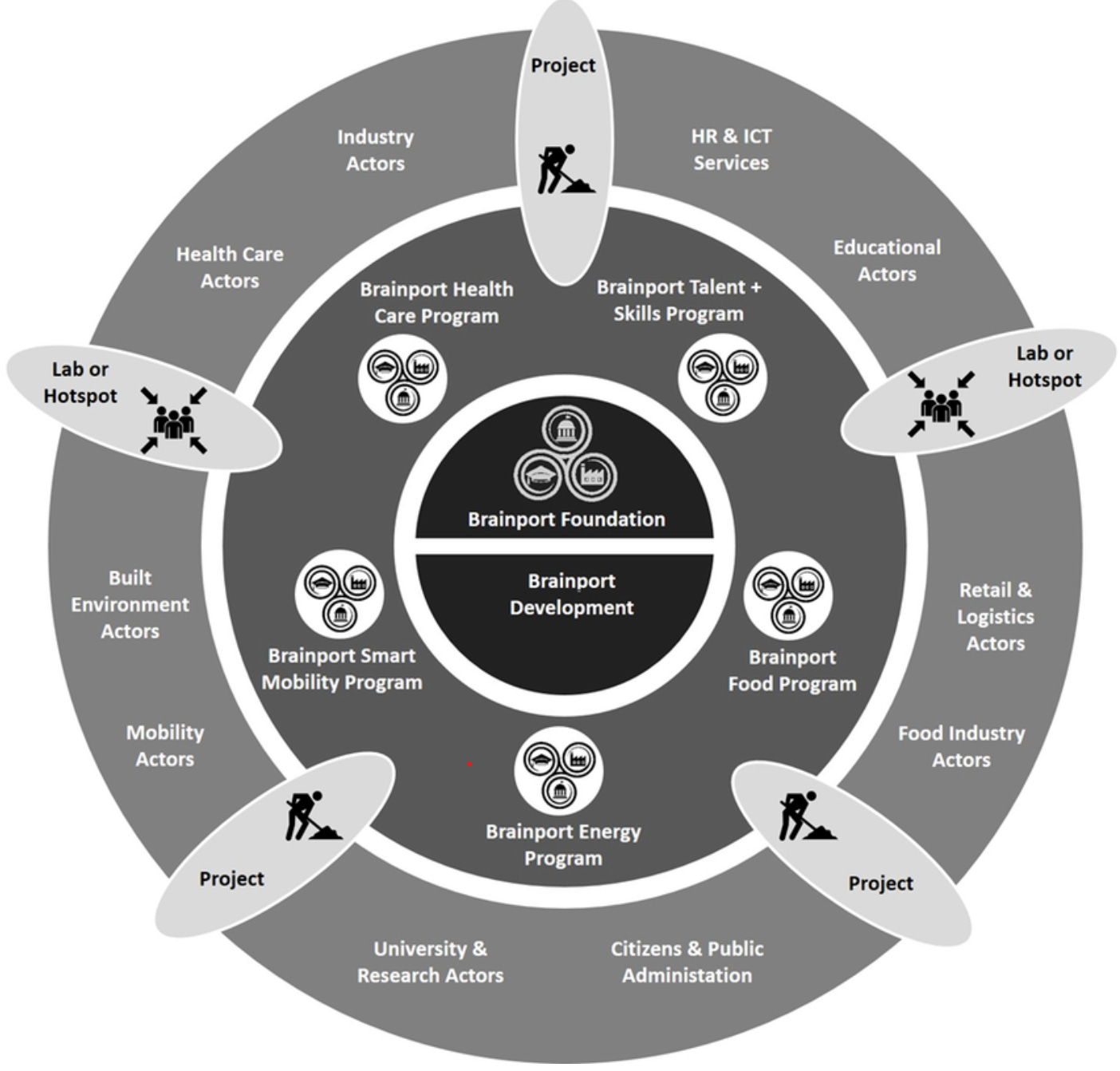
Public-private partnerships ensure curricula evolve with industry demands, while lifelong learning programs support workforce adaptability.
The result is one of Europe’s most innovative regions, with high productivity, strong export performance, and resilient growth even during economic shocks.
For me Eindhoven illustrates how a clear future-oriented vision, centred on human capabilities, can transform a regional economy.
Triple-helix collaboration can work well. It is going to take time and patience to align all three parties. But when it works the results can be transformational.
Austin, Texas: Tech Boom Meets Talent Pipeline
A few years ago, it wasn’t at all obvious what Austin, Texas would become.
The city has evolved from a state capital with a strong university presence into a major tech hub, often called “Silicon Hills.” The University of Texas at Austin serves as a central pillar, supplying talent in engineering, computer science, and entrepreneurship while collaborating closely with companies like Dell, Apple, Tesla, and numerous startups.
The city’s economic development strategy explicitly links education to growth targets. Initiatives include workforce alignment programs, community college and private training partnerships for mid-skill jobs, and efforts to make education accessible and relevant to high-growth sectors such as software, clean tech, and advanced manufacturing.
Austin balances rapid growth with equity considerations, using education as a tool for inclusive opportunity. Its success highlights the power of aligning higher education, further education, and private providers with a visionary economic roadmap.
It is a great place to live, and the people of Austin plan to keep it that wat.
Common Elements of Success
These cities share several key practices:
Strategic Alignment: Long-term economic visions explicitly incorporate human capital development as a core pillar, rather than treating education as a separate social service.
Multi-Provider Ecosystems: Partnerships among universities, community colleges, vocational programs, and private trainers create seamless pipelines from foundational skills to advanced, specialized capabilities.
Industry Co-Creation: Employers help shape curricula, offer apprenticeships, and co-invest in research and training facilities.
Focus on Adaptability: Emphasis on lifelong learning, reskilling, and competencies like AI literacy, creativity, and complex problem-solving prepares workers for future disruptions.
Inclusive Growth: Programs target underserved populations to broaden opportunity and build a resilient workforce.
Challenges and Broader Lessons
A common theme in these essays is that nothing is easy, and that the things that are worth fighting for are, well, worth fighting for.
Despite many successes, implementing human-capability strategies presents significant challenges. Each initiative will need to be carefully crafted, communicated, revised, repackaged, repurposed, and more.
Coordinating multiple stakeholders, universities, private providers, employers, government agencies, and community organizations, requires sustained political will, effective governance structures, and sometimes cultural shifts away from siloed operations. Sustaining political will can be easier to write than to do, but the strong or the bloody minded seem to achieve it.
Funding remains a persistent issue; building high-quality programs, updating infrastructure, and supporting lifelong learning demand substantial and consistent public and private investment, which can be difficult amid competing fiscal priorities or economic downturns.
Other hurdles include skills mismatches (where education fails to keep pace with rapidly evolving industry needs), equity gaps that risk leaving behind disadvantaged or older workers, brain drain in smaller or less attractive cities, and the difficulty of measuring long-term returns on human capital investments, which often materialize over decades rather than electoral cycles.
Additionally, rapid technological change (such as generative AI) can render certain skills obsolete quickly, requiring agile systems that many traditional institutions struggle to maintain.
Broader lessons from these pioneering cities are clear and actionable.
First, human capital development must be embedded at the heart of economic strategy, not treated as an afterthought.
Second, collaboration across sectors, higher education, further education, private providers, and industry, is essential for relevance and scale. Third, success favors cities with a bold, shared vision of the future that prioritizes adaptability, innovation, and inclusion.
Finally, while incentives and infrastructure matter, people are the ultimate drivers of sustainable growth.
As the global economy increasingly rewards knowledge, creativity, and resilience, more cities worldwide are likely to adopt similar integrated models.
By embracing further and higher education alongside private providers within a forward-looking strategic vision, urban leaders can unlock human potential, build economic resilience, and drive inclusive prosperity for decades to come.
References
Armstrong, B. (2020–2025). University-led economic development in legacy industrial cities: Pittsburgh’s experience. Economic Development Quarterly.
Brookings Institution. (2017). Capturing the next economy: Pittsburgh’s rise as a global innovation hub. https://www.brookings.edu/wp-content/uploads/2017/09/pittsburgh_full.pdf
Horlings, L. (2013). Leadership in Brainport Eindhoven: The role of place-based leadership in a triple helix context [Conference paper]. Regional Studies Association Annual Conference. https://www.regionalstudies.org/wp-content/uploads/2018/07/Horlings_Leadership_in_Brainport_Eindhoven_paper_RSA_conference_2013-1.pdf
Muro, M., Rothwell, J., & Saha, D. (with others). (2019–2024). Talent-driven economic development series. Brookings Metropolitan Policy Program. https://tacc.org/sites/default/files/documents/2019-11/brookings-metro_talent-driven-economic-development.pdf
National League of Cities. (2017, November 9). How Austin, Texas got equitable economic development right. https://www.nlc.org/article/2017/11/09/how-austin-texas-got-equitable-economic-development-right/
Pittsburgh Regional Alliance & Visit Pittsburgh. (2024–2025). Economic transformation and innovation reports. https://www.visitpittsburgh.com/blog/city-of-surprises/
Rauch, J. E. (Cities, information, and economic growth. In Cityscape and related HUD publications. World Bank. (various). Human Capital Project reports and regional development studies. https://www.worldbank.org/en/publication/human-capital
Additional contextual sources:
Glaeser, E. L. (2011). Triumph of the city: How our greatest invention makes us richer, smarter, greener, healthier, and happier. Penguin Press.
Hanushek, E. A. (2013). Economic growth in developing countries: The role of human capital. Economics of Education Review, 37, 204–212. https://doi.org/10.1016/j.econedurev.2013.04.001
Moretti, E. (2012). The new geography of jobs. Houghton Mifflin Harcourt.
Footnotes
If you’ve enjoyed this article, please join our community and help share the message through subscribing, clicking like, and restacking to your community.
I promote the Action Learning Questions method to address complex challenges with potentially multiple answers.
Full disclosure we benefit from community members joining the Action Learning Facilitator Accreditation (ALFA) Post-Graduate Certificate with York St. John University. This helps our channel.
My latest book, Delivering Social Value in Urban Development, a collected series of essays, is published through Kindle Direct Publishing and available on most Amazon portals.
Please also check out our Concepts, Case Studies and Tools for Program Managers, Urban Planners, Policy Makers and Communities on Gumroad.
You may also like the article The Oxford-Cambridge Corridor:
The Oxford-Cambridge Corridor

Amongst the talk of a “Northern Powerhouse” in the UK, and more recently “levelling up” it came into sharp focus that in no small part the nation’s prosperity rests in a relatively small area of southern England.
It took me a while to get there but I've reached the conclusion that cities that treat education and skills development not as isolated social policies but as core components of their economic strategy are better positioned to navigate uncertainty. I'm about to make a presentation to that effect to a development agency and thought I 'd write about it here to clarify my thoughts.
Really useful framing. I especially like the point that education and skills cannot just be treated as social policy, but have to sit at the centre of economic strategy.
For Scotland, this feels highly relevant. We often discuss universities, colleges, industrial policy, public services and regional development as separate debates, when the real question is whether we have the institutional capacity to connect them into a long-term national strategy.
The Pittsburgh and Eindhoven examples are particularly interesting because they show that places do not recover simply by attracting investment. They recover when they build systems that develop human capabilities, retain talent, connect anchor institutions and give people a route into the future economy.
That feels like an important lesson for any serious discussion about Scotland’s next economic model.